Smile, You’re On Camera

Smile, You’re On Camera
A deeper discussion about Automatic License Plate Readers
The DSA Against Data Centers campaign has recently decided to add opposition to “automated license plate readers” to its purview. You may have heard of the company Flock, or the acronym “ALPR” recently, as the use, misuse, and destruction of these devices has been in the news a lot lately. For this piece, I would like to give our members an overview of what these devices are, how they are supported politically and economically, and why we as members of the working class and the DSA specifically should oppose their use, especially in their current form.
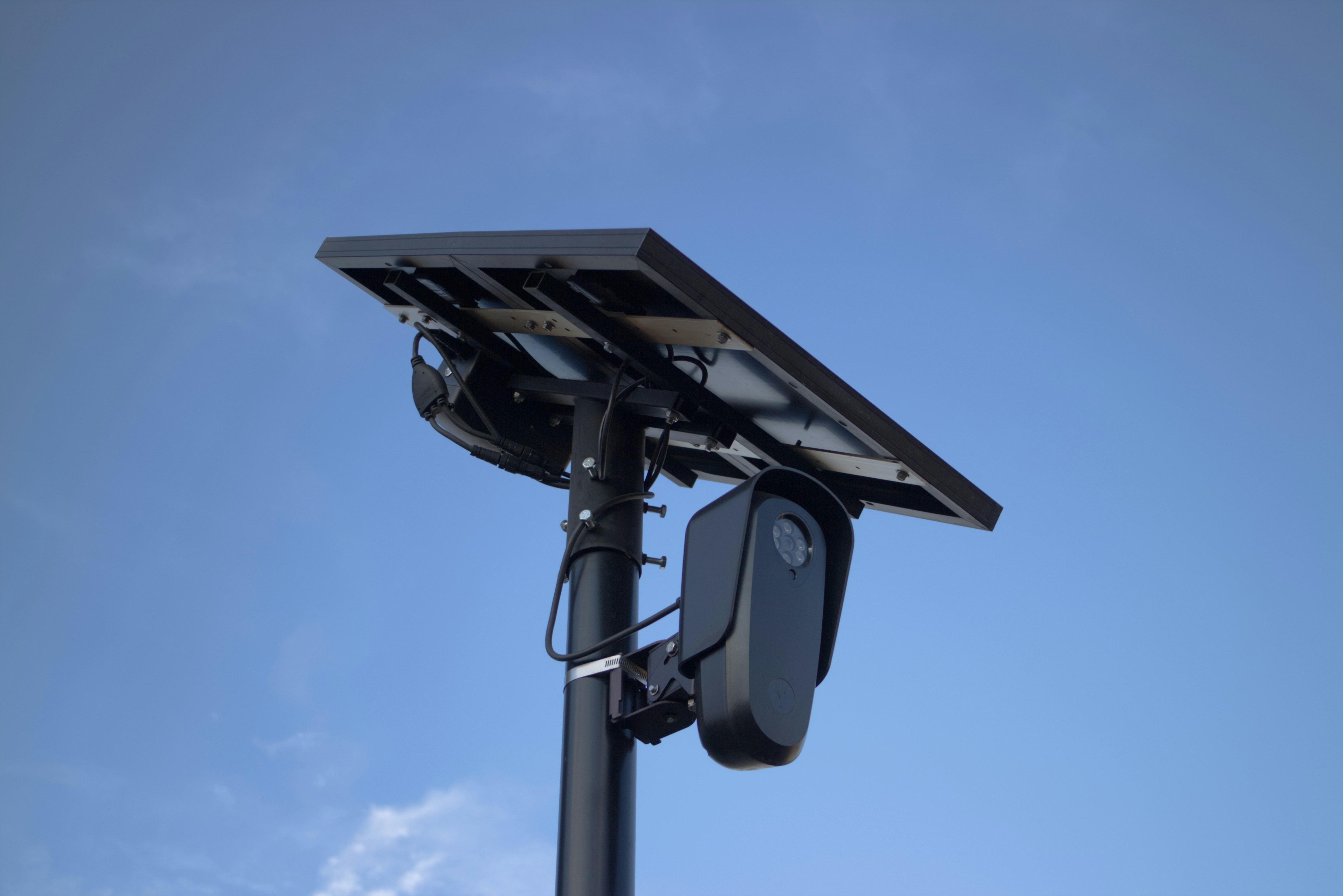 Photo by Mother Flocker on Unsplash
What is an Automated License Plate Reader? It is a camera connected to a computer vision system that is designed to capture pictures of, and recognize the letters on, license plates. They have been in use for niche applications for a long time—places like parking lots, toll roads, and airports use them for security, access control, and assessing tolls. For the past few years, their use has spread to much more general applications. Increasingly, municipalities will install ALPRs on public roads, typically on their borders and in “high crime” areas, to scan the license plates of every passing car. The justification for this is to help prosecute crimes like vehicle theft or to help track down someone who is on the run.
In practice, these license plate reader networks are mostly used for stalking, of both the ostensibly legal and personal vendetta varieties.
The way the installation of these cameras work is typically that a local police department or sheriff’s office pressures the municipality (who owns or has easement rights on all the land adjacent to all the roads) to spend their money—your money—on these readers, and then the police department gets access from the vendor to the interface that lets them use the readers. One unit of government “owns” it, but a different one uses it.
The largest manufacturer of these cameras is a company called Flock. The second largest vendor is Axon, who you may have heard of before, because they make police body cameras. We’re going to be focusing on Flock in this article because that is what you will typically see in the Chicago suburbs.
 Photo by Etienne Girardet on Unsplash
Flock cameras are usually, but not always, composed of an oval-shaped camera and a solar panel mounted to a fiberglass pole, all painted black. Inside the camera body is a large lithium polymer battery, the camera optics, and a small computer with a cellular data connection. The camera is constantly recording locally and running basic image recognition. When it sees a license plate, it takes that single frame, or sometimes a short video, and uploads it to Flock’s cloud for further processing. Once in the cloud, the plate is run against databases of stolen vehicles and plates registered to people with active warrants. The datapoint is then stored on Flock’s servers for an amount of time dependent on the jurisdiction. Note that license plates are not the only thing they can snapshot and upload. Flock maintains that their devices cannot track biometric data, but there are instances of cops using Flock cameras to track pedestrians, so I believe they can be configured to alert on a generic human silhouette. At the Socialism Summit, one of the presenters said that “Flock owns the data generated by the cameras” which seems odd to me, you’d think that the data would be “owned” by the municipality that owns the pole, even if flock is holding it on their servers. If it is true, it’s quite alarming.
Now that we understand how these systems work technically, let’s circle back to how they work on a practical level. The main use for these systems by the local PD is flagging people with outstanding warrants. If you’ve ever seen a cop sitting at the edge of town next to one of these readers, they are waiting for someone,anyone, with an outstanding warrant to drive by. They will then pull that person over for a minor traffic violation and take them into custody. Note that the cops are trained to lie to drivers about why they are being pulled over and to omit the license plate hit from their report. I don’t think I need to explain to anyone here why the vast majority of warrants that could get you into a situation like this are bullshit.
The core use for these ALPR systems is to systematize enforcement of laws that very few people are in favor of, and that we as socialists oppose on principle. The systematic use itself is being covered up, as a matter of company and police policy.
Now I hear you asking, “Comrade, you always save the best for last, how could this possibly get any worse?”
 Photo by
 Well, let’s talk about how ICE uses these cameras.
ICE turns the equation on its head. Instead of sitting and waiting for a hit on a stolen car or a bench warrant, ICE feeds lists of immigrants into Flock’s query system and uses it to determine when and where people are the most vulnerable to abduction. Most of the instances where you hear about ICE pulling someone over and dragging them out of their car are powered by license plate reader data. Is this kind of dragnet an illegal search? A violation of your constitutional rights? Yeah, probably, but good luck getting ICE to stop doing it. Is it against Illinois state law for local law enforcement to share that data with ICE? Yeah, definitely, but there are a lot of racist cops in Illinois, and they very often share data even though it’s illegal.
 Photo by Corey Young on Unsplash
So how can we fight these? There is the obvious political solution of getting municipalities to cancel their contracts and cut down the cameras. Barring that, municipalities can audit access logs for their camera data to identify cops sharing data illegally. Our DSA Against Data Centers (DADC) campaign is currently working on rolling these points into their campaign.
In addition to getting involved in the DADC campaign, there are several ways to learn more and get more involved. I would encourage everyone to read Unraveled Press’s article “Eyes on the Heartland” (linked below) to understand some of the political and cultural context of these systems. If you are interested in learning more about and documenting the use of Flock in your community, there is a nationwide effort to map out ALPRs called DeFlock.
You might be feeling overwhelmed. After all, these things are in your community, constantly watching you and your friends. I think there are a lot of scenarios in which allowing these cameras to remain functioning could seriously constrain DSA operations in the future. Protecting ourselves against this future requires all of us to step up now.
Further Reading
Harm Reduction in the Time of Monsters

Harm Reduction in the Time of Monsters
The POWER Act and Me
“The old world is dying, and the new world struggles to be born: now is the time of monsters.” ― Antonio Gramsci
I open with this (somewhat apocryphal) quote because I believe it perfectly encapsulates our present moment. Capitalism has reached yet another crisis and again returns to the well of fascism to maintain its grip on power. I cannot blame those who look around and assume that our only recourse is down a road there is no coming back from; but to believe this, one has to give up on any hope of a better world being possible through other means. I don’t believe this strain of thought benefits anyone. So long as any other avenue remains, it should be explored. There are many systemic issues that won’t be solved by legislation alone, and ultimately implementing socialism will be the answer to those lingering issues. But, there are still levers we can demand our government pull to mitigate and protect us from the harm caused by unregulated capitalism. HB5513/SB4016, otherwise known as the Protecting Our Water Energy and Ratepayers (POWER) Act, is one of those levers. The POWER Act may not go far enough in the opinions of some, but it is the best option currently on the table to rein in the unregulated proliferation of data centers in our communities, one of the latest ploys by creeps like Zuckerberg, Bezos, and Ellison to extract yet more value from our labor and tighten the noose of fascism by enabling their surveillance state. In our struggle for victory, we cannot lose sight of measures that will provide amelioration of the conditions of the working class. In short: harm reduction is based.
One of the most accessible issues with the proliferation of data centers is the impact it has on our energy bills. I am sure we have all been shocked at the price of our ComEd bills compared to last year. The Citizens Utility Board recently published figures that show ComEd rates are up 40-50% from just two years ago! Industry experts are laying the blame squarely at the feet of data center developments. ComEd is a part of the Regional Transmission Organization (RTO) called PJM Interconnection. PJM manages the interconnected grids for northern Illinois (ComEd) and all or part of 11 other states and the District of Columbia. To ensure that there is adequate capacity within the grid, PJM holds annual auctions of the energy planned to be produced . All projects projected to be connected to the grid are taken into account when these auctions take place. Because data center developments are largely speculative in nature, many of the data center projects may never actually be built but still need to be assumed as true when determining prices for the finite supply of energy available in the RTO. These increased prices impact all levels of the grid, from local distribution to the plants providing the energy. We see this trickle all the way down to your ComEd bill.

Illustration by saatvik 5554 on Unsplash
So how would the POWER Act help us?
First, it would (1) require utilities to create new policies to protect consumers from subsidizing data center related transmission and distribution infrastructure upgrades to the grid, (2) require data center developers to foot the bill for their interconnection costs, and (3) require that data center-related price increases from PJM are passed to data centers and not other consumers. Second, a policy framework within the POWER Act known as BYONCE (Bring Your Own New Clean Energy) would incentivize developers to come to the table with their own supply of renewable energies. Developers that provide proof they will back their projects with local, renewable clean energy—certain percentages of supply need to be met by key dates to qualify—would see an expedited path to interconnection and would not be subject to the energy curtailments during periods of peak demand that data centers that do not bring their own clean new energy would face. The POWER Act would establish guardrails to steer price increases away from everyday consumers and save us from the “wild west.”
Another issue when it comes to data centers, particularly the hyper-scaled variety, is the water usage associated with cooling and powering their hardware. Previous generations of hyper-scaled data centers could consume millions of gallons of water a day. Increasingly, we are seeing that newer data centers are opting to use closed-loop cooling as they come under increased scrutiny regarding their impact on local water supplies. Closed-loop cooling technology is presented as being more water-conscious than open-loop evaporative cooling. At face value, this is true, but the benefits aren’t as large when you begin to factor in their increased energy consumption .These closed-loop systems also consume millions of gallons when they are first filled, and this is not just a one-and-done process. These systems need to be filled and flushed numerous times after assembly to ensure the plumbing is cleared of debris caused by the assembly process. Recently, the waste water from one of these data center flushes in Cheyenne, Wyoming was not treated properly prior to being flushed into the city’s waste water system, which is reused throughout the city to provide water for sprinkler systems in parks and golf courses. The warm moist environment in these cooling systems requires anti-biological additives to prevent biological contamination of the system, and testing confirmed an outbreak of Cupriavidus gilardii within the Cheyenne waste water. An investigation traced the outbreak back to improperly-treated flush water from a Meta data center.
Once filled and running, these systems still need to be flushed and refilled about every 10 years. The liquid running through the system once operational is about 75% water and 25% Propylene Glycol, an anti-corrosive and anti-freeze additive. Questions still remain about the long term impact on our waterways from these chemicals. The POWER Act introduces reporting and efficiency requirements that will help mitigate the harms outlined here. For example, data centers will be required to transparently publish their water consumption and local water supply impact. The Illinois State Water Survey will be required to review each data center’s specific water use plan and likely impacts on the region. The Illinois Environmental Protection Agency would be prohibited from issuing any permits if evaluations confirm that a data center will have adverse impacts on water resources.
The environmental harms of unregulated data centers are the more “in your face” issues associated with this fight, but you would also be hard-pressed to find a more clear example of the fascism creeping into everyday life in America. All across the country we see the same stories: communities standing together to voice their opposition to a local data center while their municipal government holds backroom meetings with the developers and pushes these proposals through, ignoring their constituents. Data center developers also force municipal governments to sign non-disclosure agreements prior to engaging with them in negotiations for a data center proposal. This leaves communities in the dark and subverts the democratic process, putting profits over people. Those with the most to lose will inevitably end up the most impacted when these deals are realized. The POWER Act would prohibit municipalities from signing onto these NDAs with data center developers. It would also ensure that there are open and transparent community benefits agreements between the developers and the municipalities in which they will be built. This ensures that the working class people in our communities see these benefits, such as funding for school systems, when a data center is built there; not just kickbacks for corrupt city councils.

Illustration by Salman Ahmad on Unsplash
Timeline
There has been extensive debate over the POWER Act since the spring:
- Feb 11: Sen. Villivalam and Rep. Gabel introduced their respective sides of the bill.
- March: Proponents and advocacy groups held press events and urged action to move the bill out of committee.
- April 15: The Illinois House Executive committee held a subject matter hearing that brought together opponents and proponents for the bill to debate.
- Late Spring: Additional committee meetings were held to debate the bill
- May 30: Environmental coalitions and hundreds of advocates rallied at the Illinois State Capitol to lobby representatives and senators, but ultimately not enough votes were secured to bring this to a vote in the Spring. Citing this inaction, JB Pritzker took executive action to suspend the data center tax credits and urged that statutory guardrails be passed.
Over the summer, WSIL DSA and other groups have been advocating for Illinois State Senators and Representatives to bring this to a vote in the fall legislative session. The POWER Act will give a shot in the arm to our renewable energies industries and ensure that the data centers that do get built are responsible partners in growth for our state.

So how can you get involved?
The easiest step you can take is to fill out our handy Action Network letter writing campaign that matches you with your state Senator and Representative and sends them a prewritten statement that urges them to bring this to a vote in the fall, and thanks them for their support if they are already a cosponsor. Once you’ve sent your letter, share the campaign with your friends and family! Your next step is joining your local DSA chapter and organizing with them to stop the unregulated spread of data centers.
Already a member? Join your chapter’s anti-data center efforts, and if they don’t have anything going, then start organizing! We need to get everyone in Illinois onboard with pushing our elected officials to action. Every voice matters and we will build a better world together!
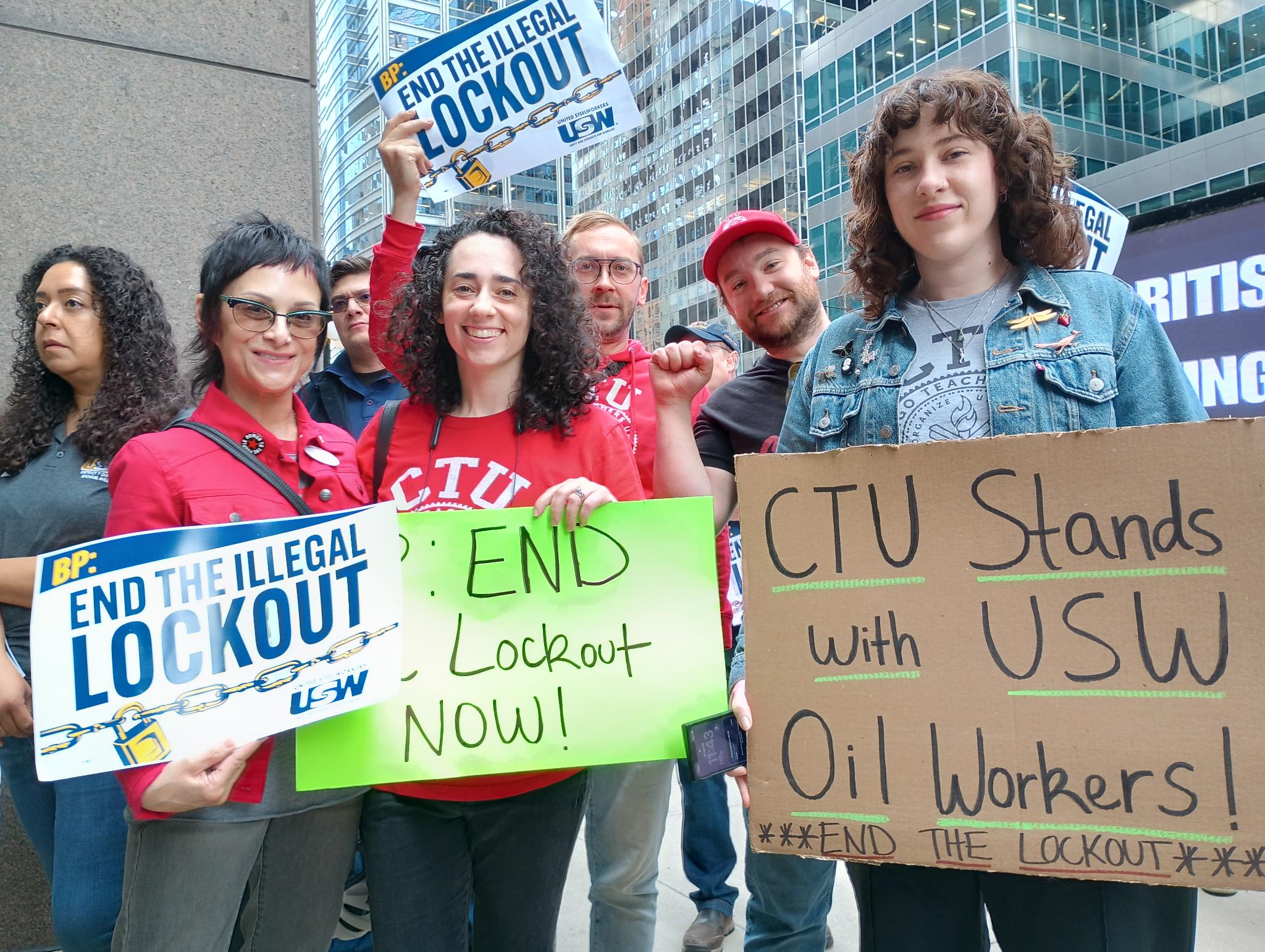
WSILDSA Stands In Solidarity With USW Local 7-1

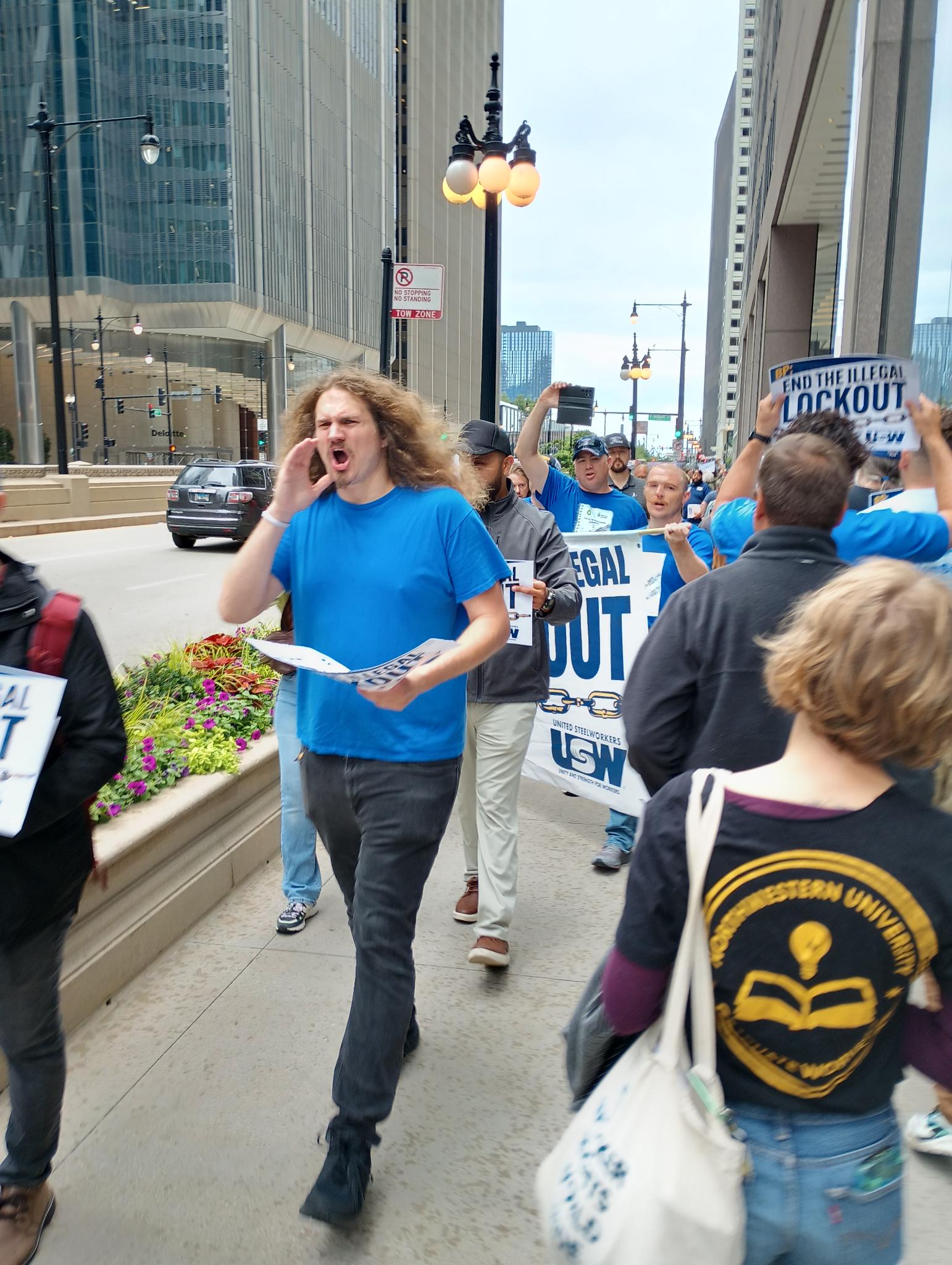
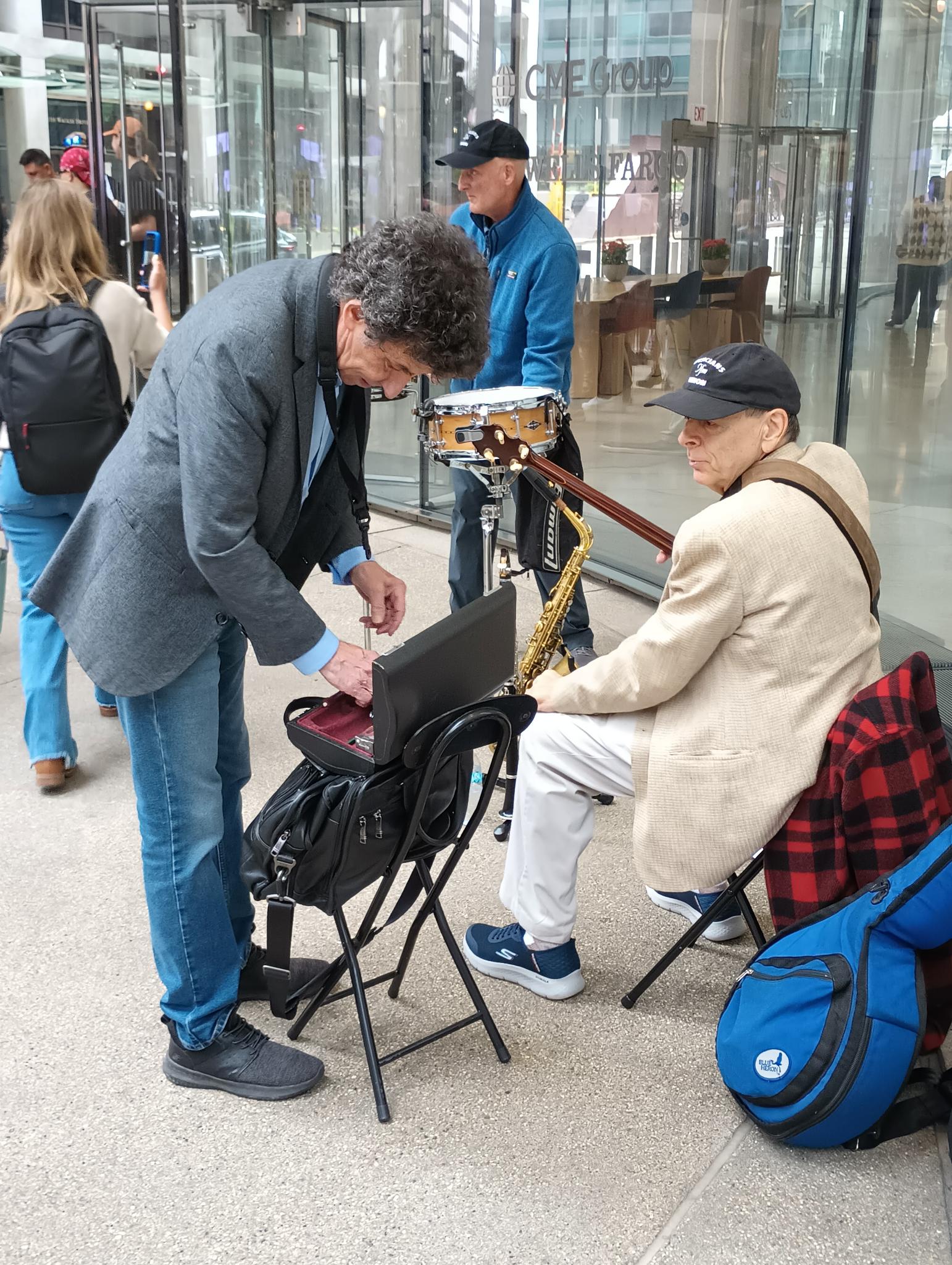
Our labor working group turned out with community allies to support the USW local 7-1 union in their fight for a dignified contract. There was music, chanting, and people power. Solidarity with all workers!
More pictures below.
Strike Support for Starbucks Workers

Unionized Starbucks Workers are on strike across the country and here in the Chicagoland area in Des Plaines (Lee and Oakton store) and Geneva (3rd and State), with the Aurora store (Kirk and Butterfield) joining the strike this Thursday 11/20/25.
West Suburban IL DSA is calling on community members to support Starbucks Workers United by doing the following:
- Sign the No Contract, No Coffee Pledge
- Show up at the picket line to support the baristas (pick dates below on form!)
- Donate to the Regional Strike Fund to support SBWU workers directly while they are out on strike
- Post about the strike on social media
- Collect and distribute non-perishable foods and home essentials for striking workers
- Prepare breakfast or lunch and bring it to the picket line
Fill out the survey below and let us know how you can help support!
Illinois DSA Lobby Day